President Donald Trump dropped a bombshell yesterday in the White House Oval Office: Iran just handed the United States a “very big present” worth a tremendous amount of money. It wasn’t nuclear-related, he stressed. It was “oil-and-gas-related” and tied directly to the flow through the Strait of Hormuz. Trump called it a “significant prize” that proves America is “dealing with the right people” in Tehran — and that Iran “wants to make a deal… very badly.”
The timing could not be more explosive. The Strait of Hormuz has been largely shuttered since the U.S.-Israeli campaign began on February 28, sending global oil prices soaring and choking off roughly 20% of the world’s traded crude. Yet Trump’s cryptic “gift” comment has energy markets buzzing with speculation: Did Washington just secure de facto control — or at least a major concession — over Iran’s crown jewel, Kharg Island?
Why Kharg Island Changes Everything
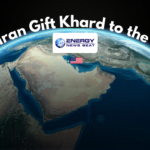
Kharg Island, a tiny coral outcrop 20 miles off Iran’s coast, handles nearly 90% of Iran’s crude exports — about 1.5–1.7 million barrels per day before the war. U.S. forces already struck military targets there earlier this month, but left the oil infrastructure largely intact. Trump has talked for decades about seizing it. Now, with Marines from the 31st MEU and additional amphibious assets en route, the island sits at the center of every war-gaming scenario.
If the “gift” Trump received is indeed related to Kharg — whether a quiet handover of operational control, a revenue-sharing deal, or Iran stepping back to let the U.S. impose order — it opens the exact off-ramp the White House has been hunting.
Here’s why that matters for energy security:Venezuelan-Style Oil Controls — The Trump administration already proved the model works in Venezuela. After removing Nicolás Maduro in January, U.S. companies moved in, production ramped back up, and discounted barrels flowed to American refiners while starving the old regime of cash. The same playbook on Kharg would let Washington regulate Iranian exports, cut off funding to proxies, and guarantee that every barrel leaving the Persian Gulf serves U.S. and allied interests — not Beijing’s shadow fleet.
Peace Through Energy Dominance — Controlling the tap on Iran’s lifeblood revenue turns the war into a negotiated settlement instead of an endless quagmire. Tehran keeps enough oil money to survive; Washington keeps the peace and the price of gasoline from hitting $6 a gallon at home.
Countries Rallying to Reopen the Strait of Hormuz
While the “gift” talks continue behind closed doors, a growing international coalition is already signaling it will not tolerate Iran’s blockade. On March 19, leaders of the United Kingdom, France, Germany, Italy, the Netherlands, and Japan issued a joint statement declaring they are “ready to contribute to appropriate efforts to ensure safe passage” through the Strait and will take steps to stabilize energy markets.
Since then, more than 20 additional nations have joined the statement, including:
Canada, the Republic of Korea, New Zealand, Denmark, Latvia, Slovenia, Estonia, Norway, Sweden, Finland, Czechia, Romania, Bahrain, Lithuania, Australia, the United Arab Emirates, Portugal, Trinidad & Tobago, the Dominican Republic, Croatia, Bulgaria, Kosovo, Panama, and North Macedonia.
These countries represent the bulk of the world’s oil-importing economies. Their unified stance puts enormous pressure on Tehran to deal — or face a multinational naval presence.
Traffic Is Already Moving — If You Pay the Toll
Even before any formal deal, ship-tracking data shows a small but growing number of tankers slipping through the Strait under Iran’s “permission-based” system. Pakistani, Indian, and Turkish-flagged vessels have transited successfully. China is in active talks for safe passage of its crude and LNG carriers. Reports indicate Iran is charging ad-hoc transit fees of up to $2 million per voyage for approved ships that radio in and receive clearance from Iranian authorities.
Lloyd’s List and Bloomberg sources describe a de facto “safe shipping corridor” run by the IRGC: register, pay, and sail. It’s not free navigation — it’s Iran monetizing its choke point — but it proves the waterway can reopen quickly once the right incentives align.
The Next Few Weeks Could Be Historic
Energy News Beat sources close to the talks say the pieces are falling into place faster than most expected:
Back-channel negotiations continue.
U.S. Marines are days from adding serious on-the-ground options at Kharg.
The international coalition is publicly locked and loaded.
Oil prices remain elevated but volatile — exactly the kind of pressure that forces deals.
We could only hope that President Trump traded Gavin Newsom for Kharg Island. (Kidding, or are we)
If Trump’s mystery “gift” is the first domino in a Kharg-centered settlement, we could see the Strait of Hormuz fully reopened within weeks — not by invasion, but by smart power, energy leverage, and the kind of deal-making Trump has always championed.
Peace through strength. Peace through oil control. Talk about Energy Dominance, as Stu Turley on the Energy News Beat Talks about “Energy Security starts at home, but Energy Dominance is displayed through your exports”, we will have to add Energy Security starts at home, and Energy Dominance is displayed through the exports that you own and control”.
Stay tuned to Energy News Beat. We’ll keep you ahead of every barrel.
Get your CEO on the #1 Energy Podcast in the United States: https://energynewsbeat.co/energy-news-beat-media-kit/
Is oil and gas right for your portfolio? https://energynewsbeat.co/invest/
The post Iranian War May Have an Off Ramp – Did The US Just Get Kharg Island? appeared first on Energy News Beat.