

The U.S. Energy Information Administration (EIA) released its 2026–27 Winter Fuels Outlook on October 6, 2026, alongside the October Short-Term Energy Outlook. The outlook paints a mixed picture for household heating costs this winter (November through March). Homes that primarily heat with natural gas or propane—about half of U.S. households—are expected to spend less than last winter. By contrast, households relying on electricity or heating oil face higher bills.Source Eia
EIA Administrator Tristan Abbey noted: “Relatively high natural gas inventories entering the winter season provide a cushion for heating demand, while households that rely on heating oil face higher prices because distillate markets remain tight.” National winter temperatures are forecast to be roughly the same as last winter and the prior 10-winter average. Regional differences matter: warmer conditions are expected in the Northeast (after a cold 2025–26 winter), much colder weather in the West (after an unusually warm one), and near-average temperatures in the Midwest and South. A strong El Niño could still produce different outcomes and alter demand and spending.Source Eia
National Expenditure Outlook
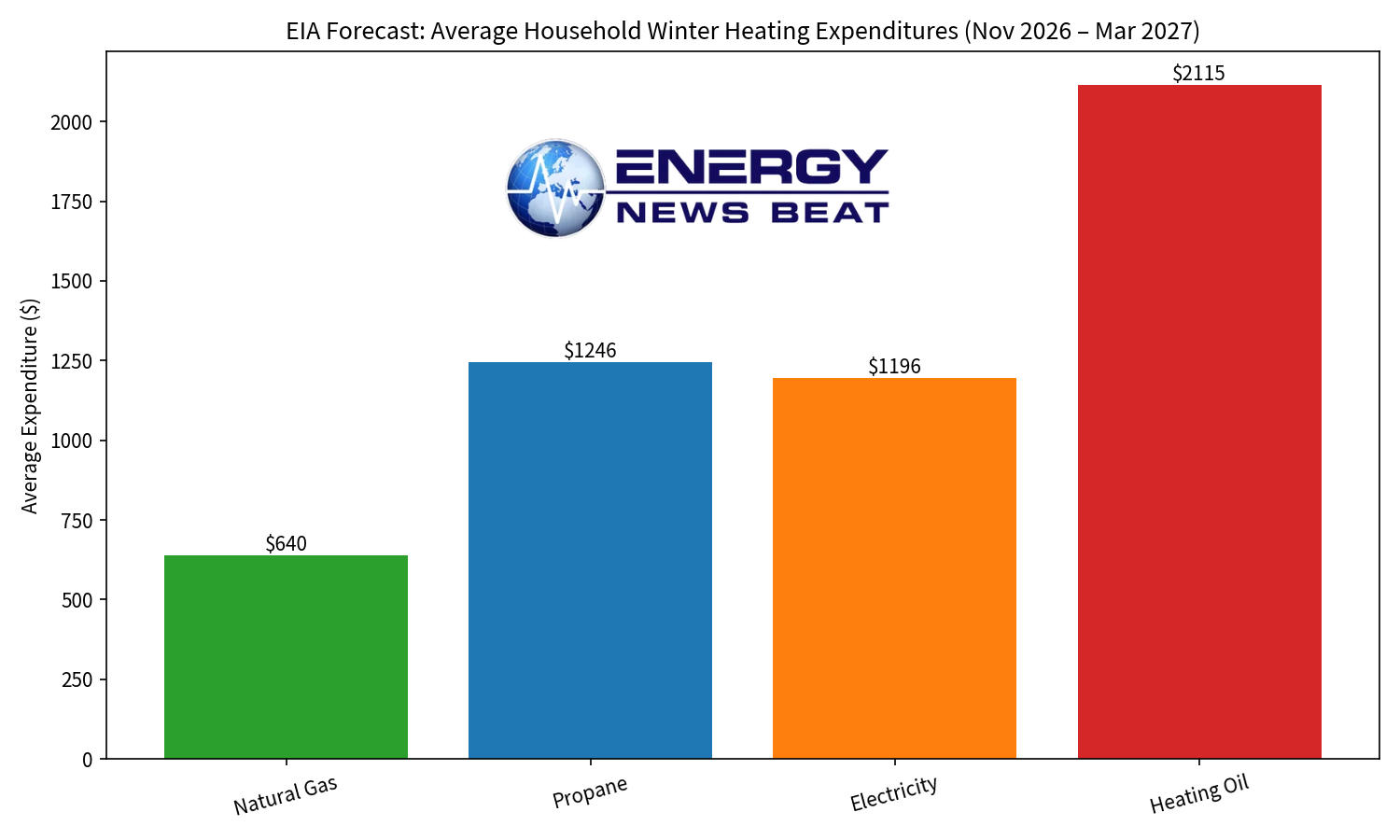
Average projected household expenditures for the heating season:
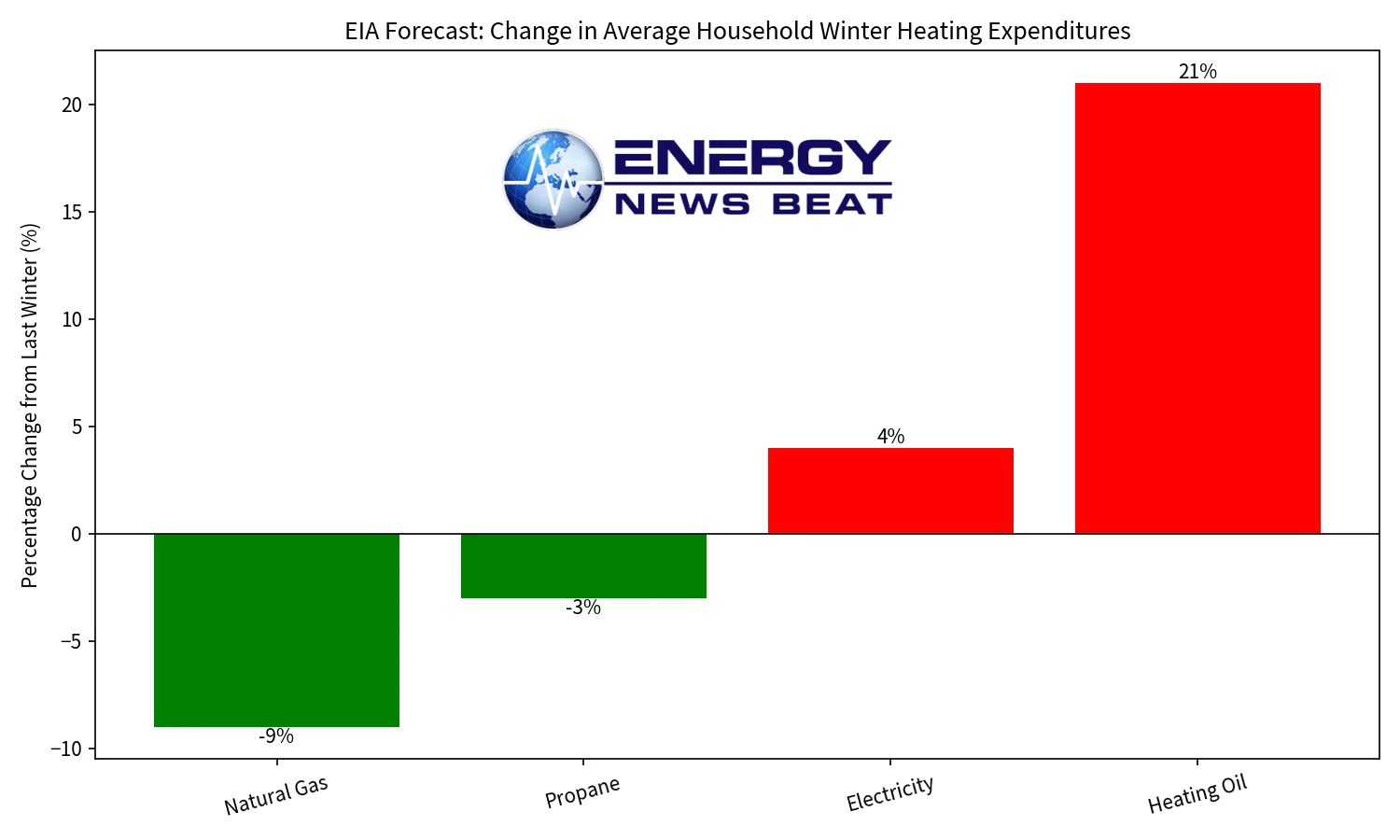
- Natural gas: $640 (−9%)
- Propane: $1,246 (−3%)
- Electricity: $1,196 (+4%)
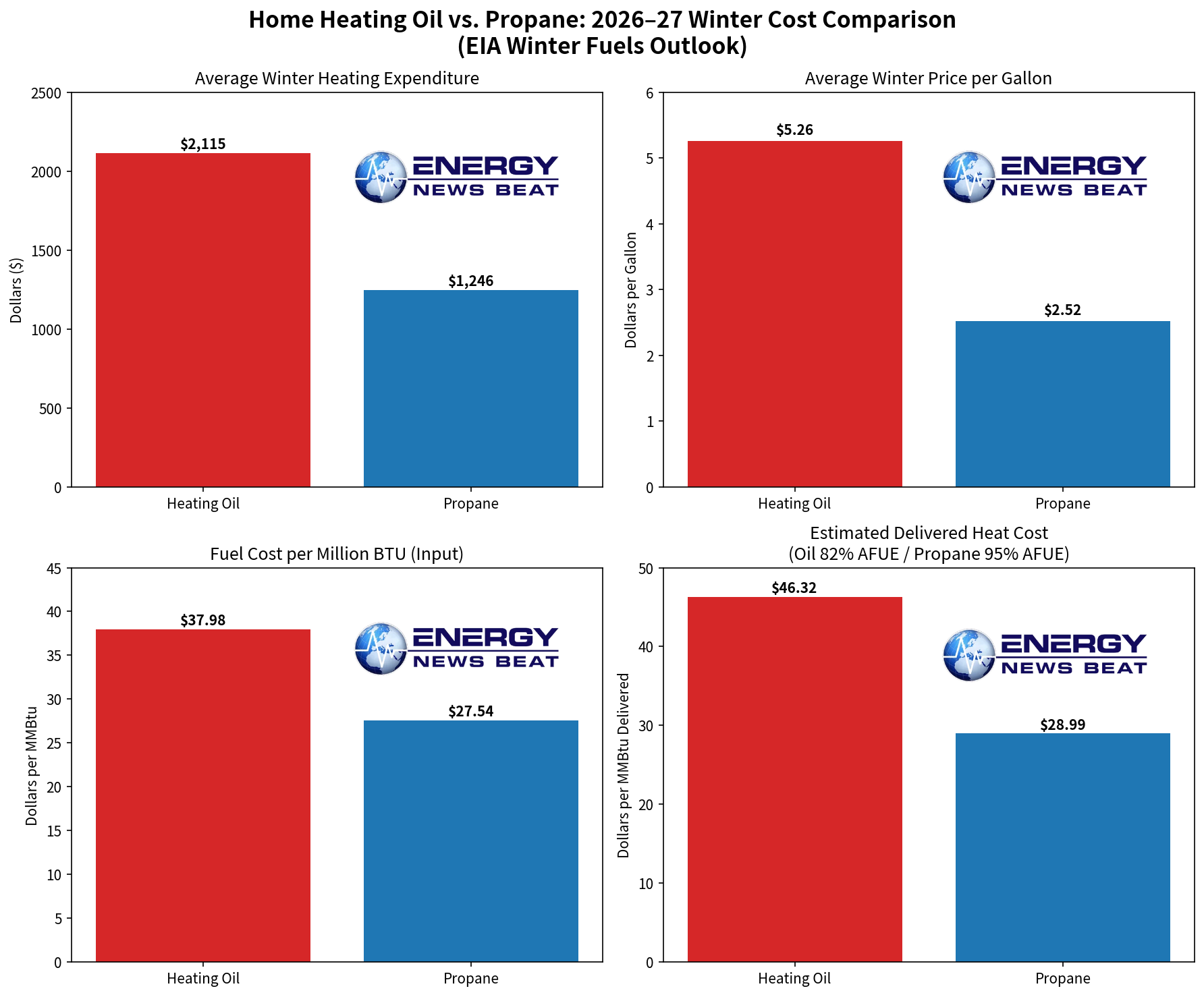
- Heating oil: $2,115 (+21%)
Percentage changes from last winter underscore the split:
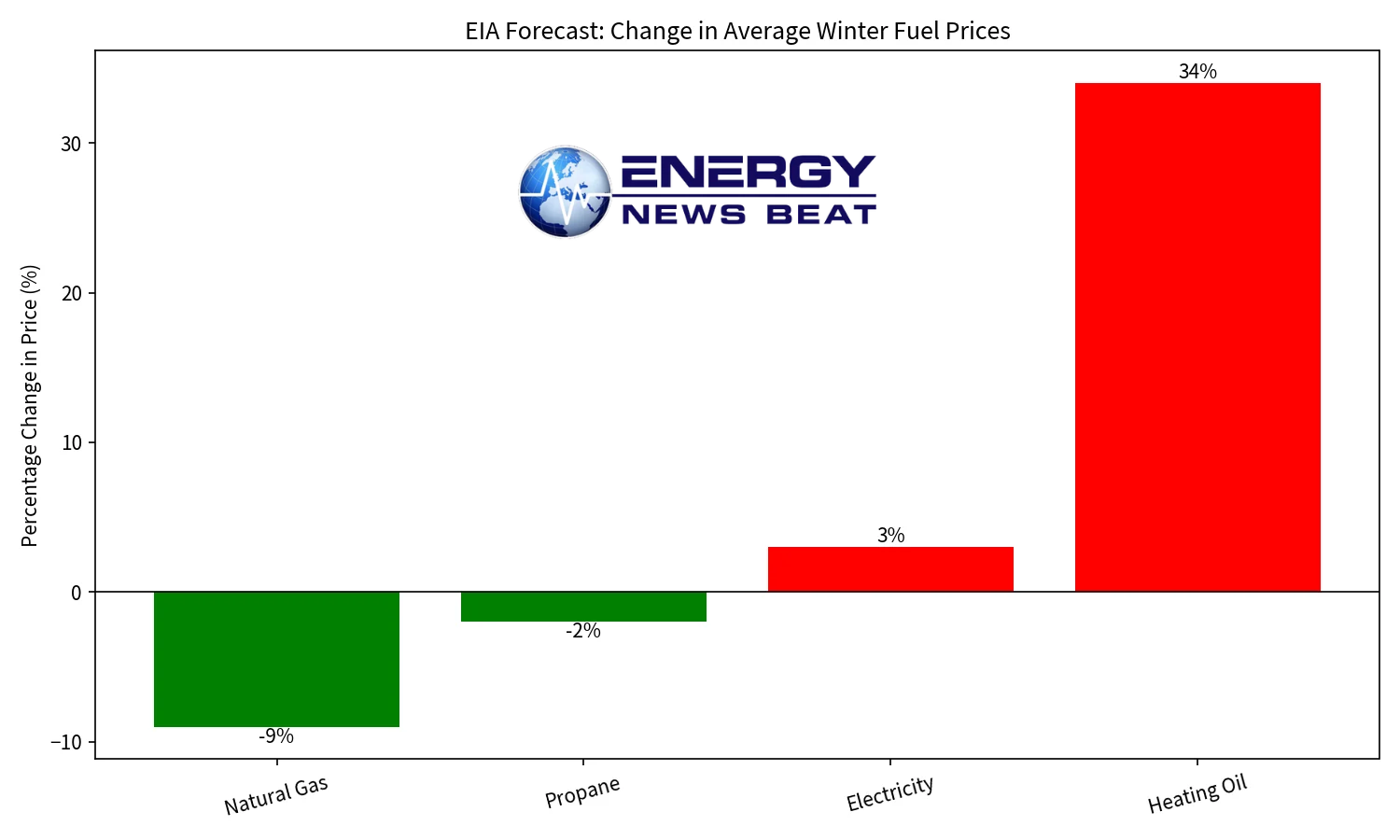
Price movements drive most of the differences. Heating oil prices are forecast to average $5.26 per gallon (+34%), propane $2.52 per gallon (−2%), residential electricity about 18.23 cents per kWh (+3%), and natural gas about $13.44 per thousand cubic feet (−9%). Consumption is expected to be flat for natural gas, down about 1% for propane, up 1% for electricity, and down 9% for heating oil (helped by milder Northeast weather).Eia
Impacts by Fuel: Propane, Heating Oil, and Electricity
Propane users (concentrated in the upper Midwest, Northeast, and parts of the South) stand to benefit from modestly lower prices and slightly reduced consumption. Nationally, the 3% drop in expenditures masks bigger regional gains in the Northeast (−15% to about $1,687) after last year’s cold winter. Midwest households are expected to see a 4% decline (to roughly $1,305), while the South is roughly flat. Lower wholesale propane prices and adequate inventories support the outlook. For homeowners, this means slightly lighter bills and less pressure to lock in expensive pre-buy contracts, though cold snaps or delivery logistics can still produce local spikes. Propane remains a flexible option for rural and off-grid homes, and the modest relief helps offset other household costs. Source Lpgasmagazine
Heating oil (home heating oil) users—about 3% of U.S. households, overwhelmingly in the Northeast—face the sharpest increase. Prices are projected more than 30% higher because of tight global distillate markets, reduced refining activity, low East Coast inventories (32% below the five-year seasonal average in September and expected to stay 20–30% below average through winter), and broader crude oil pressures. Milder Northeast weather is expected to cut consumption by about 9%, limiting the net expenditure increase to 21% ($2,115 average). Homeowners should expect higher per-gallon costs and potentially tighter delivery schedules. Strategies such as tank monitoring, efficiency upgrades, or (where practical) fuel switching become more attractive. The global distillate tightness linked to ongoing market disruptions is unlikely to ease quickly. Source Eia
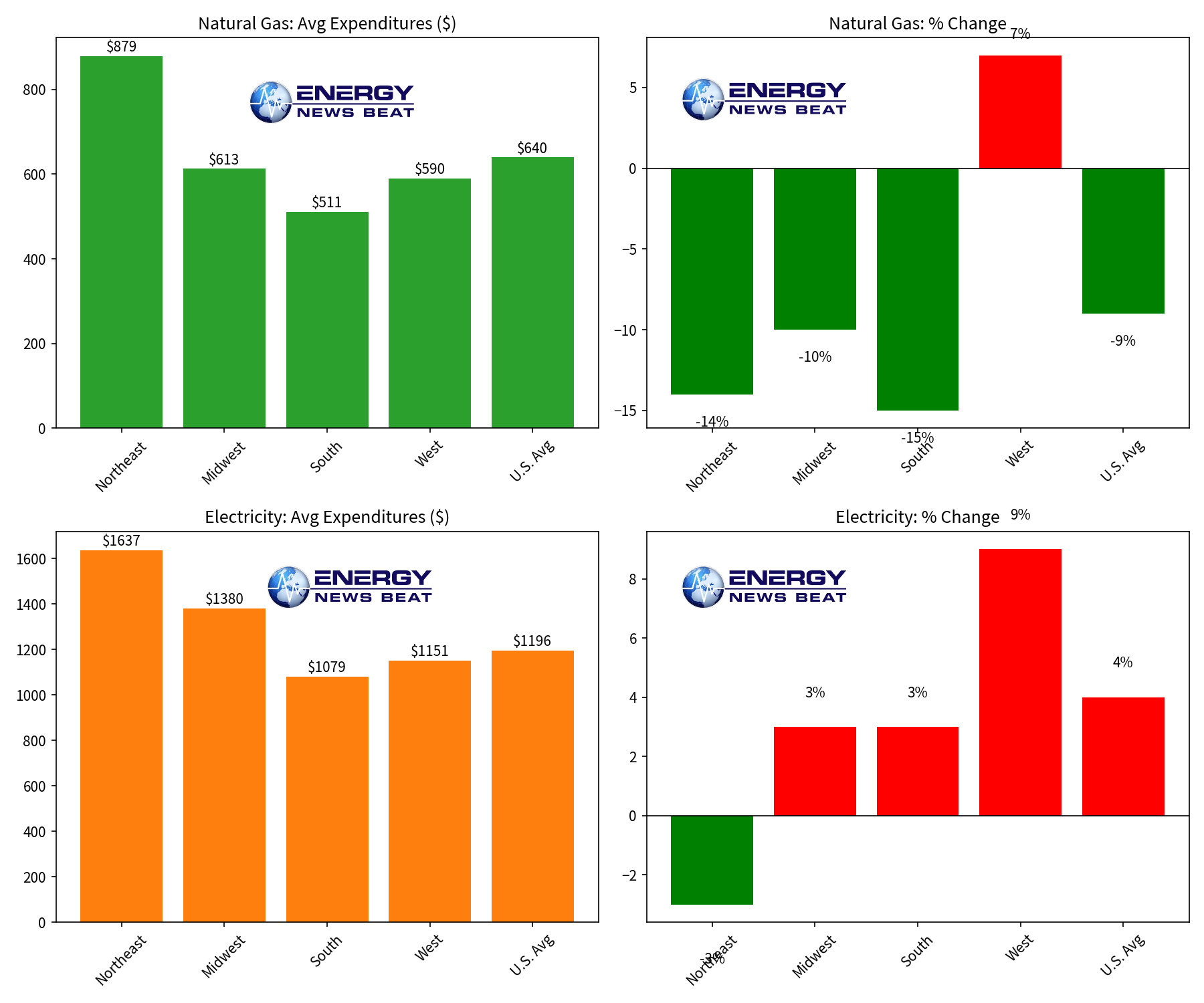
Electricity-heated homes (more than 40% of households) are projected to see a 4% rise in bills. A roughly 3% increase in residential rates combines with slightly higher consumption. Regional variation is significant: the West faces the largest increase (+9%) because of much colder forecast weather, while the Northeast may see a small decline (−3%) from warmer conditions. Wholesale power prices are expected to average $52/MWh in 2026 (+11% from 2025), with sharp regional differences (e.g., PJM up sharply). For homeowners, this means modestly higher winter electric bills on top of any summer cooling costs. Heat-pump users and those in regions with rising rates will feel it most; efficiency measures and time-of-use awareness remain useful.
Regional natural gas and electricity expenditure and percentage-change comparisons illustrate the weather-driven splits:
Broader Context
Natural gas inventories are expected to enter winter about 2% above the five-year average, supported by strong production. This cushions prices even as LNG exports grow. Distillate markets remain tight, with East Coast stocks well below normal and limited ability to rebuild quickly via imports. Crude oil assumptions include gradual recovery in Middle East flows, but Brent is still forecast near $105/b in the fourth quarter of 2026 before easing. Weather remains the biggest wild card; the EIA’s colder and warmer side cases can swing expenditures meaningfully.Eia
Overall, the 2026–27 winter favors natural gas and propane households while pressuring heating oil and, to a lesser extent, electric-heat users. Regional weather differences and fuel-specific market tightness will determine actual bills more than the national averages. Homeowners should review local forecasts, consider efficiency upgrades, and monitor inventory and price signals through the season.
We will be interviewing Tucker Perkins with the Propane Education & Research Council on November 3rd to cover home backup power with more propane. I will forward this and get their opinions. Propane is much cleaner, and we have a lot of resources in the U.S. You can also see that the price, if the Democrats don’t ban it, would be significantly lower.
Now, when you add a propane-powered generator as a backup, you really want to look at the cost of switching from home heating fuel.
Propane Gas Association of New England (PGANE) Safe Appliance Rebate Program (active in New England states):
- Up to $500 for the required safety check when installing a propane central heating system plus a domestic hot water heater.
- $250 for heating system only or water heater only.
- Handled through your propane supplier (they submit the paperwork as an accredited representative).
- Reservation must be submitted before installation; final paperwork within 60 days.
- Excludes new construction, pool/space heaters, and propane-to-propane replacements.
Many suppliers layer additional incentives on top. Examples include:
- $500 off equipment installation + $250 new-customer credit (e.g., Eastern Propane offers).
- $750 off oil-to-propane conversions from some marketers (e.g., Sail Energy), plus the PGANE rebate.
- Stacked offers in the $500–$1,100 range when you sign a multi-year fuel agreement or pre-buy.
Other notes:
- Federal Energy Efficient Home Improvement Credit (Section 25C) previously covered high-efficiency propane furnaces/boilers (up to $600), but it ended for equipment placed in service after December 31, 2025.
- State and utility programs vary widely. Some efficiency programs focus more on heat pumps or insulation than pure oil-to-propane switches. Check the DSIRE database or your state’s energy office.
- No large-scale government “oil-to-propane conversion grant” exists comparable to some Canadian oil-to-electric incentives. The main help comes from the propane industry and individual suppliers.
Local propane dealers (especially in Maine, New Hampshire, Massachusetts, Vermont, Connecticut, New York, and Pennsylvania) are the best starting point—they handle the PGANE process and often have current promotional packages.
Typical Conversion Costs
Costs depend heavily on whether you can use a conversion burner on existing equipment, need a full new high-efficiency system, the type of system (furnace vs. boiler), tank situation, and oil-tank decommissioning.
Common ranges (2025–2026 estimates for residential homes):
- Basic burner conversion (compatible existing furnace/boiler + labor): roughly $2,000–$4,500.
- Full system replacement (new high-efficiency propane furnace or boiler + installation): $4,500–$10,000+ for the equipment side.
- Propane tank: Many suppliers lease tanks for $50–$250 per year (sometimes free for the first year with a conversion contract). Buying one is often $1,000–$3,000+.
- Gas lines, venting, and related work: $500–$3,000 (depends on distance and code requirements).
- Oil tank removal/decommissioning:
- Above-ground: typically $500–$1,500.
- Underground: $1,500–$5,000+ for a clean removal; substantially more if soil contamination is found.
Overall realistic totals: Most complete residential conversions fall in the $4,000–$12,000 range, with many landing around $5,000–$9,000 once all pieces (equipment, lines, tank setup, and oil-tank work) are included. Northeast labor and code requirements tend to push costs toward the higher end. Underground oil tanks or major venting/chimney work are the biggest cost escalators.
Practical Considerations Tied to Current Fuel Costs
With EIA projecting heating oil expenditures up ~21% this winter (prices ~34% higher, partially offset by milder Northeast weather) while propane expenditures fall ~3% nationally, the operating-cost case for switching has improved for many homes. New propane equipment is also typically more efficient (often 90–98% AFUE) than older oil systems (commonly 70–85%).
Other advantages frequently cited: cleaner burn, lower maintenance, no soil-contamination risk from leaking oil tanks, and the ability to add other propane appliances (water heater, range, generator, etc.).
Next steps:
- Contact 2–3 local propane suppliers for free on-site assessments and quotes that include all rebates and any fuel-agreement discounts.
- Confirm whether your existing equipment can take a conversion burner or needs full replacement.
- Get a clear plan (and cost) for the oil tank.
- Verify current PGANE and supplier offers, as they can change.
The post EIA Expects a Mixed Picture for Winter Fuel Costs This Year appeared first on Energy News Beat.