
“Energy Security Starts at home, and Energy Dominance comes through your exports, But your energy dependence is defined by who you import from”. – Stu Turley.
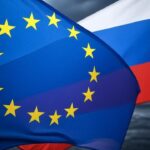
The European Union is once again grappling with an escalating energy crisis in early 2026, driven by geopolitical tensions that have disrupted key supply routes. With Ukraine halting Russian oil transit through the Druzhba pipeline to countries like Hungary and Slovakia, and Qatar’s sudden shutdown of its liquefied natural gas (LNG) exports following Iranian drone strikes, energy prices are soaring. European natural gas futures have surged by as much as 85% in recent days, reaching multi-year highs around €59 per megawatt-hour (MWh).
This volatility raises a critical question: at what price point might the EU reconsider its commitment to phasing out Russian energy imports by 2027, potentially reopening pipelines like the remaining intact line of Nord Stream 2? As storage levels dwindle to critically low levels—around 30% across Europe, with Germany at 20.5% and France at 21%—the bloc faces a stark choice between energy security, economic stability, and geopolitical principles.
The Ukraine Oil Transit Halt: A Political and Energy Standoff
The crisis intensified on January 27, 2026, when oil flows through the southern branch of the Druzhba pipeline— a Soviet-era artery supplying Russian crude to Hungary and Slovakia—were suspended following what Ukraine described as a Russian drone strike on pumping infrastructure in western Ukraine.
Ukraine’s Energy Minister Denys Shmyhal reported severe fire damage, halting shipments and sparking a bitter dispute within the EU.
Hungarian and Slovak officials, however, accuse Kyiv of deliberately prolonging the outage for political leverage, labeling it “energy blackmail.”
In retaliation, Slovakia halted emergency electricity supplies to Ukraine, while Hungary blocked a €90 billion EU loan to Kyiv and threatened to veto new sanctions on Russia.
Ukrainian President Volodymyr Zelenskyy has been blunt, stating there is “no intention whatsoever” to restart transit, emphasizing that Hungary and Slovakia should be grateful rather than accusatory.
The European Commission has urged Ukraine to allow inspections and resume flows, with President Ursula von der Leyen discussing the issue directly with Zelenskyy.
This disruption affects only a fraction of Europe’s oil supply but exacerbates tensions, as Hungary and Slovakia remain the EU’s last major importers of Russian crude via pipeline.
If unresolved, it could force these landlocked nations to seek costlier alternatives, potentially raising regional fuel prices by 10-20%.
Qatar’s LNG Shutdown: A Global Supply Shock Hits Europe Hard
Compounding the oil woes is Qatar’s indefinite halt of LNG production at its Ras Laffan and Mesaieed facilities after Iranian drone strikes amid the U.S.-Israel-Iran conflict.
Qatar, the world’s largest LNG exporter, supplies about 7-15% of Europe’s LNG needs, but the shutdown removes roughly 20% of global export capacity, triggering a scramble for cargoes.
European gas prices exploded by 40-85% in a single session, the sharpest rise since the 2022 Russia-Ukraine shock, with benchmark Dutch TTF futures hitting €59/MWh.
The timing couldn’t be worse: Europe’s gas inventories are at historic lows for March, around 30% full compared to a typical 54% average.
Analysts warn that a prolonged outage could triple prices to €92/MWh, embedding a “risk premium” and pushing the TTF floor to €45-55/MWh for the rest of 2026.
Asia, Qatar’s primary market, will compete fiercely for diverted supplies, but Europe’s vulnerability is acute due to its post-2022 shift from Russian pipelines to LNG.
Qatar has declared force majeure, stoking fears of a winter supply crunch if the Strait of Hormuz remains disrupted.
This event underscores Europe’s structural dependence on volatile maritime routes, trading one risk (Russian pipelines) for another (global chokepoints).
Read this headline slowly.
The European Union is urging Ukraine to allow access to a pipeline carrying Russian oil.
The same EU that sanctioned Russian energy. The same EU that spent three years building an architecture of economic warfare against Moscow. The same EU that told… https://t.co/6FzM0k6Lra pic.twitter.com/nAyamjNF6P
— Shanaka Anslem Perera
(@shanaka86) March 3, 2026
Europe’s Broader Energy Crisis: Phase-Out Plans Under Pressure
The EU has been aggressively weaning itself off Russian energy since the 2022 invasion, reducing gas imports from 45% of supply in 2021 to 13% in 2025.
In January 2026, member states approved a stepwise ban: spot Russian LNG from early 2026, full LNG by 2027, and pipeline gas by late 2027.
Oil imports have already plummeted to 3% under sanctions.
The REPowerEU roadmap mandates national diversification plans by March 2026, aiming for energy independence and alignment with green goals.
Yet, the current shocks are testing this resolve. Norway’s Energy Minister Terje Aasland noted that the Iran conflict could “revive the debate” on the Russian ban, as Europe’s low storage amplifies risks.
Sanctions have cost the EU millions of jobs—5.4 million short-term and 32.3 million long-term—while boosting energy costs.
With TTF prices already double pre-crisis levels and volatile, some analysts predict a rebound in Russian imports if alternatives falter.
When Might the EU Ask Ukraine to Resume Oil Transit or Reopen Nord Stream?
The tipping point could come if gas prices sustain above €50-60/MWh, levels that threaten recession and industrial competitiveness.
For oil, Hungary and Slovakia’s threats to block EU aid might force Brussels to pressure Kyiv sooner, potentially by mid-2026 if alternative supplies prove insufficient and prices spike 10% in those countries.
Zelenskyy’s firm stance suggests concessions would require EU mediation, perhaps tied to Ukraine’s accession talks.
On Nord Stream, one undamaged line of Nord Stream 2 could theoretically restart within a year if approved.
Rumors of U.S.-Russia talks under a potential Trump-Putin deal, involving American investors, hint at a revival by late 2026 or 2027.
However, EU law bars certification without diversification, and the phase-out plan explicitly rejects Nord Stream as non-diversifying.
A severe crisis—prices tripling or blackouts—might prompt reconsideration by winter 2026-27, especially if Qatar’s outage persists.
An Energy Shift on the Horizon?
Yes, we’re witnessing a profound shift. Europe’s pivot from Russian pipelines to LNG has exposed new vulnerabilities, as seen in the Qatar fallout.
Qatar capitalized on the Ukraine war to fill the void left by Russia, but Middle East instability now threatens that.
This could accelerate renewables and efficiency measures, but short-term pain might tempt a Russian rapprochement.
As one observer noted, Europe’s “slow economic suicide” via self-imposed cuts continues, but survival instincts could prevail at €90/MWh or higher.
The coming months will test whether ideology trumps economics in the EU’s energy strategy.
Sources: arabnews.com, @battleforeurope, bruegel.org,
The post At What Price Will the EU Open Russian Gas and Oil Pipelines? appeared first on Energy News Beat.