

California’s reliance on imported energy has long been a vulnerability — one that its aggressive anti-fossil fuel policies and renewable mandates have only deepened. Now, exporting states and international suppliers are signaling they will put their own citizens and booming local economies first. The latest blow comes from right across the border in Nevada, and it’s a clear preview of what’s coming for the Golden State. As Stu Turley on the Energy News Beat Podcast says, “Energy Security starts at home, and Energy Dominance comes through your exports”, but energy realities are about to hit a lot of consumers who voted or live in poorly run states and countries.
Nevada Draws the Line: “We Cannot Impact Our Existing Customer Base.”
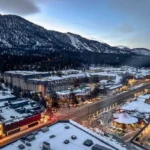
On March 20, 2026, CalMatters reported that NV Energy has told Liberty Utilities it will stop supplying power after May 2027. Liberty serves 49,000 customers in the Lake Tahoe basin — including the California side in South Lake Tahoe. Roughly 75% of Liberty’s power has come from Nevada; the rest is its own solar. NV Energy’s reason is blunt: “unprecedented times” driven by data centers requesting to triple peak capacity. The utility says it simply “cannot impact its existing customer base.”
Liberty’s president, Eric Schwarzrock, made it clear his company will bid “to anybody and everybody” for replacement power that meets California’s strict renewable requirements while keeping costs affordable. But transmission realities mean the new supply will almost certainly come from outside California. This is not a minor border dispute — it is a neighboring state openly prioritizing its own explosive growth over exporting reliable power to California.
Data centers are exploding across the Southwest. Nevada, Arizona, and other states are seeing AI-driven demand that could consume 20% or more of their electricity by 2030. These states are no longer eager sellers in the regional market; they are fighting to keep the lights on for their own residents and new industries.
California’s Massive Import Dependence — By the NumbersCalifornia is the poster child for energy dependence:Electricity: Imports supplied roughly 22% of total system power in 2024 (62,157 GWh out of 278,338 GWh total), down slightly from prior years but still a critical lifeline. Northwest hydro and wind plus Southwest solar and gas make up the bulk.
Historically, the figure has hovered near 30%.
Natural Gas: Nearly 90% of California’s supply comes from out-of-state pipelines (Rocky Mountain, Permian Basin, and limited Canadian sources). In-state production is minimal.
Crude Oil & Refined Products: Over 75% of crude processed by California refineries is imported. Top foreign sources in recent years include Iraq (22%), Ecuador, Saudi Arabia, and Colombia. With multiple refinery closures and conversions, California is now importing record volumes of finished products: gasoline imports hit four-year highs in 2025 (West Coast ~119,000 barrels per day), while diesel and jet fuel imports fill gaps created by shrinking domestic refining capacity. California is the nation’s largest jet-fuel consumer and relies on foreign sources for roughly 20% of its diesel and jet fuel.
In short, California produces very little of what it burns or plugs in — and the states and countries that have been supplying it are increasingly saying “we need it here first.
”The Global and Interstate Shift: Own Citizens First
The Nevada decision is not happening in isolation. Across the Southwest, utilities and regulators are watching data-center demand skyrocket and are rethinking long-term export commitments. Arizona and Nevada are already warning that clean-energy targets could slip because of the sheer volume of new load. Meanwhile, foreign crude suppliers (Middle East, Latin America) face their own domestic pressures and OPEC+ decisions — and they have zero incentive to subsidize California’s policy-driven energy poverty when better-paying or more stable buyers exist.
California’s own policies have accelerated the problem. Aggressive refinery closures, bans on new oil and gas development, and rigid renewable mandates have reduced in-state supply while demand (EVs, data centers, population growth) continues to climb. The result? Higher prices, greater volatility, and now explicit warnings from suppliers that the free ride on other states’ and countries’ energy is ending.
Liberty Utilities will scramble to replace Nevada power by 2027. But every new contract it signs will likely cost more and come with less reliability than the old arrangement. Multiply that across the state — where imported electricity, gas, and petroleum products underpin everything from morning commutes to server farms — and the math is ugly.
The Bottom Line
California’s energy crisis is about to get significantly worse. Exporting states like Nevada are no longer reliable partners; they are protecting their own citizens and new industries first. International crude suppliers have their own priorities. The state that once exported energy is now an energy island — and the bridges are being pulled up behind it.
Energy News Beat will continue tracking every curtailment, every price spike, and every policy failure. California’s leaders have choices to make — but time is running out, and the lights are flickering.
Sources: CalMatters, , Grok, @energyabsurdities, energy.ca.gov
The post California’s Energy Crisis about to get worse. Exporting Energy states and Countries are going to curtail exports appeared first on Energy News Beat.