
This week, the European Union doubled (or tripled) down on its net-zero agenda with a flurry of proposals that critics describe as micro-managed, unrealistic, and dangerously detached from energy system realities. From a sweeping electrification mandate to tweaks in carbon pricing and selective delays on enforcement, Brussels continues to prioritize targets over reliable power, affordability, and practical engineering.
These moves come as Europe’s grid already struggles with intermittency, connection delays, and the integration of weather-dependent sources. Adding massive new electric loads without corresponding stable baseload or dispatchable capacity risks higher costs, reliability problems, and further deindustrialization.
Here’s a breakdown of the key developments:
1. First-Ever Electrification Target: 46% by 2040
The European Commission has proposed a headline electrification target of 46% of final energy consumption from electricity by 2040 (up from roughly 23–24% today). This forms part of the overhaul tied to a 90% greenhouse gas reduction goal.
We will be Live Monday morning at 7:00 a.m. Central from Texas, the UK and EU. The Live link is below.
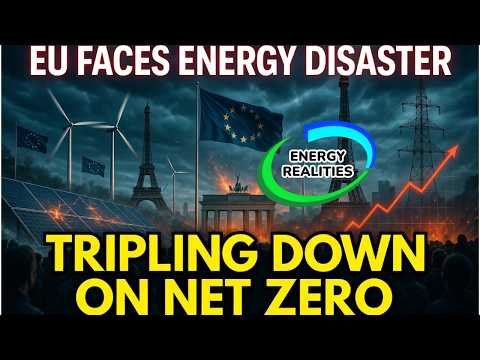
The plan envisions replacing gas boilers with heat pumps, internal combustion engines with EVs, and fossil processes in industry with electric alternatives. Supporting elements include electricity-to-gas price ratio targets (2.5:1 for households, 2:1 for industry), a 200 GW energy storage goal by 2030, and accelerated heat pump deployment.
Proponents claim this could deliver around €200 billion in savings on fossil fuel imports by 2040. However, the EU grid is already under strain from renewables integration and permitting bottlenecks. Dramatically increasing electric demand without major additions of firm, dispatchable power (nuclear, efficient gas, or other reliable sources) invites exactly the problems Europe has already experienced: price spikes, curtailment issues, and reliability risks. The focus remains heavily on “unreliables” plus storage, with little emphasis on the physics of baseload stability.
2.ETS Reforms: Slowing the Phase-Out, Not Repealing the Damage
The Commission has proposed changes to the EU Emissions Trading System (ETS) that push the net-zero industry deadline back significantly — from 2039 toward the mid-century (around 2048 in some analyses). This involves lowering the annual linear reduction factor of the emissions cap (from 4.3–4.4% down to 3.7% from 2031 and 1.7% from 2036) and making free allowances more conditional on decarbonization investment plans.
Rather than scrapping or fundamentally reforming this costly, distortive system, policymakers are merely tweaking timelines and conditions. This preserves the underlying framework that has driven up energy costs and pressured heavy industry.
3. Aviation Carbon Pricing Overhaul:
Private Jets Included (Selectively)The EU is expanding ETS carbon pricing to more aviation activity. Proposals target commercial flights to neighboring hub airports (within roughly 5,000 km of Frankfurt, e.g., Istanbul or Dubai) while fully covering private jets departing or arriving in the EU. Routes to the US and China remain exempt, and there are provisions to assess CORSIA effectiveness before broader long-haul application.
This selective expansion raises questions about competitive fairness and genuine emissions impact, while still layering costs onto European operators and travelers.
4. CBAM Expansion to Downstream Products
MEPs in the European Parliament’s Environment Committee have backed strengthening the Carbon Border Adjustment Mechanism (CBAM) by extending its scope to a long list of downstream products (finished steel and aluminum goods such as fasteners, wire, springs, and household articles). They also introduced tougher anti-circumvention rules and proposed a temporary decarbonization fund (2027–2029) to support EU producers.
The stated goal is a level playing field and loophole closure. In practice, this expands compliance burdens and will likely raise costs for downstream manufacturers and, ultimately, consumers — all in the name of “protecting the economy.”
5. Methane Rules: Three-Year Penalty Delay (Not Repeal)
In response to an open letter from the US, Qatar, Nigeria, Algeria, and other producers warning of supply disruptions, the European Commission plans to recommend delaying penalties for non-compliance with methane import rules by three years (from 2027 to 2029, except in cases of large-scale fraud).
The rules require monitoring, reporting, and verification standards for fossil fuel imports, with steep potential fines. Instead of acknowledging the legislation’s flaws and repealing it, Brussels offers a temporary reprieve — widely seen as waiting for potential political shifts in the United States.
6. China Pushes Back: New Decrees Block EU-Style Supply Chain Demands
A critical related development underscores the global limits of Brussels’ extraterritorial reach. Since May 2026, China has issued new decrees (including Regulations on Industrial and Supply Chain Security and Regulations on Countering Improper Extraterritorial Jurisdiction) that make it effectively illegal or highly risky for companies to provide the detailed supply chain information, audits, or facility verifications demanded by EU regulations (such as due diligence or CBAM/ETS compliance).
These rules prohibit certain information collection and data transfers, authorize countermeasures (including asset freezes, trade restrictions, and private lawsuits), and create frameworks to block compliance with foreign measures deemed improper. European (and other) multinationals now face an impossible choice: violate Chinese law to satisfy EU demands or risk non-compliance with Brussels rules. This could accelerate the departure of foreign firms from China or force costly restructuring.
The Bigger Picture
These proposals reveal a consistent pattern: instead of confronting the practical failures of aggressive net-zero timelines — grid constraints, industrial flight, energy poverty risks, and international pushback — the EU responds with more targets, more conditionality, selective delays, and expanded bureaucracy. Micro-management from Brussels continues to substitute for engineering reality and market signals.
Europe’s energy security and competitiveness depend on reliable, affordable, dispatchable power. Doubling down on policies that ignore these fundamentals while China and other players protect their interests is a recipe for higher costs, lost industry, and diminished influence.
Appendix: Sources and LinksAll links and sources referenced or drawn upon in this article:
- https://www.euractiv.com/news/eu-sets-out-first-ever-electrification-target-46-by-2040/
- https://www.euronews.com/my-europe/2026/07/09/brussels-eyes-200bn-in-savings-by-electrifying-europes-economy-draft-reveals
- https://www.euractiv.com/news/brussels-pushes-back-net-zero-industry-deadline-close-to-mid-century/
- https://euperspectives.eu/2026/07/brussels-relaxes-carbon-rules/
- https://www.euractiv.com/news/eu-targets-neighbouring-hub-airports-and-private-jets-in-carbon-pricing-overhaul/
- https://ieu-monitoring.com/editorial/environment-meps-strengthen-carbon-border-adjustment-and-close-loopholes/1245064
- https://financialpost.com/pmn/business-pmn/eu-to-delay-by-three-years-methane-rules-penalties-on-importers
- https://www.jonesday.com/en/insights/2026/05/caught-in-the-crossfire-two-new-china-decrees-raise-the-stakes-on-sanctions-compliance
- https://www.whitecase.com/insight-alert/china-issues-new-countering-improper-extraterritorial-jurisdiction-regulations
Additional context drawn from official EU-related reporting on the Electrification Action Plan and related files (July 2026). For the Energy News Beat Channel — straight talk on energy realities.
The post EU Triples Down on Net Zero: Parliament and Commission Push Absurd, Destructive Policies appeared first on Energy News Beat.