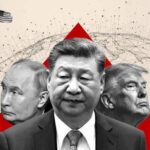
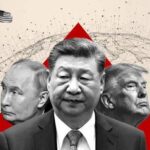
Russian President Vladimir Putin has proposed a trilateral summit with U.S. President Donald Trump and Chinese President Xi Jinping next month to discuss ending the war in Ukraine, according to an exclusive Wall Street Journal report cited by Bloomberg and other outlets on October 18-19, 2026.Bloomberg
The idea was first raised during a phone call between Putin and Trump on October 9—the same conversation that produced a deal for the United States to buy Russian diesel fuel and facilitate its sale internationally. Kremlin officials have suggested holding the talks on the sidelines of the Asia-Pacific Economic Cooperation (APEC) summit in Shenzhen, China, scheduled for November 18-19. Ukrainian President Volodymyr Zelensky would not be invited, an unprecedented exclusion that the WSJ reported is expected to alarm many European countries.Jpost
Kremlin spokesperson Dmitry Peskov confirmed that discussions about a possible meeting are ongoing, stating there is “no clear understanding yet regarding the meeting itself or its potential agenda,” though the three sides acknowledge the hypothetical possibility. A senior U.S. official told the Journal that Trump has not formally agreed but could be open to the idea given his longstanding push to end the conflict. Chinese officials have indicated they would not object if Trump participates, though some have expressed concern the meeting could overshadow China’s role as APEC host.Jpost
The proposal arrives amid heightened tensions. On Sunday, Trump publicly accused Zelensky of not wanting to end the war “and probably never did,” while urging Ukraine to stop attacking Russian diesel refineries. Zelensky has criticized U.S. moves toward Moscow, including the diesel deal and related sanctions relief.Jpost
The Energy Link: Diesel Deal and Refinery Strikes
The October 9 call is central for energy markets. Trump announced that Russia would immediately supply over 300,000 tons of diesel to the American and global marketplace, followed by 500,000 tons in November, 1 million tons thereafter, and potentially millions more depending on refinery conditions. The U.S. Treasury issued a temporary general license allowing Russian diesel sales until April 2027, reversing years of sanctions pressure.Washington Post
This came as Ukrainian drone strikes have disrupted Russian refining capacity—estimates range from 20-45% offline at peaks—contributing to a global diesel squeeze alongside other factors such as disruptions linked to the Iran conflict. Russia had extended its own diesel export ban amid domestic shortages and queues at fuel stations. Trump has repeatedly blamed Ukraine’s strikes for high U.S. and global diesel prices ahead of midterm elections and pressed Kyiv to halt them. Ukraine briefly observed a claimed “energy ceasefire” before resuming strikes after accusing Russia of continued attacks on its own energy infrastructure.Forbes
Energy analysts have questioned whether Russia can deliver the promised volumes given the damage to its refining system. For Energy News Beat readers, the deal illustrates how energy diplomacy and conflict dynamics are tightly intertwined: U.S. market relief and lower prices for consumers versus the risk of providing Moscow revenue that funds its war effort.
Impacts on Ukraine
Excluding Zelensky from talks aimed at ending the conflict on terms favorable to Moscow would leave Ukraine with little direct voice in decisions about its territory, security guarantees, or future energy infrastructure. With Russian forces pressing on multiple fronts, manpower challenges, and pressure on air defenses, a great-power settlement risks forcing territorial concessions. Kyiv’s strategy of striking Russian energy targets—intended to degrade Moscow’s war economy and export revenues—could face further U.S. opposition if the summit advances and diesel flows are prioritized.
Zelensky has already described elements of the U.S.-Russia engagement as using Ukraine as a “front” or smokescreen. Continued isolation from talks would deepen that perception and complicate Western military and financial support.
Impacts on the EU: Sidelined and Feeling the Hurt
European leaders are positioned to feel distinctly sidelined—and, in the language of diplomatic frustration, their feelings are likely to be hurt. The EU has maintained a consistent line of pressure through successive sanctions packages, rejected any easing that would boost Russian revenues, and continued to support Ukraine militarily and economically even as Washington opened the diesel channel.Politico
Post-diesel deal reactions from EU foreign ministers and leaders, including High Representative Kaja Kallas, emphasized that “the only way” to end the war is more pressure on Russia and that Europe would “continue on our own path.” Leaders have criticized the sanctions waiver as concerning and incoherent with the goal of forcing Moscow to negotiate, while reaffirming solidarity with Kyiv. A trilateral summit without Europe or Ukraine would reinforce the sense that core European security questions are being decided by the U.S., Russia, and China.Euronews
Energy dimensions amplify the unease. Europe has largely weaned itself from pipeline Russian gas but remains sensitive to global diesel markets and the broader principle of not funding the war through energy sales. Increased Russian diesel availability could ease prices short-term, yet it undercuts the EU’s sanctions architecture and signals that energy leverage still works for Moscow. China’s potential role as host and mediator adds another layer: Beijing is already a major buyer of Russian energy and a supplier of dual-use goods, and European capitals have grown wary of that relationship. A China-hosted deal over their heads risks further straining EU-China ties.
In short, the EU finds itself in a weaker position relative to both the battlefield realities and the diplomatic table. Its long-standing assumption of tight transatlantic coordination on Russia is under strain, and this proposal crystallizes that shift.
Broader Geopolitical and Energy Implications
The proposed summit would elevate China as a pivotal player and potential mediator, aligning with Xi Jinping’s interest in positioning Beijing as a balancer among great powers. Analysts cited by the WSJ noted China’s desire to be seen as the pivot, even while Beijing balances support for Putin against economic ties with Europe.Jpost
At the APEC venue itself, bilateral Putin-Xi talks are already expected. Russian officials have flagged the long-stalled Power of Siberia 2 gas pipeline (roughly 50 bcm/year capacity from western Siberian fields through Mongolia to China) as a possible agenda item. That project would help replace lost European market share for Gazprom and further reorient Russian energy exports eastward.Easternherald
For global energy markets, a successful summit that reduces fighting could ease supply risks from Ukrainian strikes and Russian export constraints. Conversely, a Moscow-favorable outcome could lock in Russian energy flows longer-term and reduce the effectiveness of Western economic pressure. The diesel deal already shows how energy can serve as both a bargaining chip and a point of leverage in peace efforts.
Whether the meeting happens remains uncertain—Trump’s attendance is not confirmed, and agendas are undefined. But the proposal alone highlights the evolving multipolar dynamics of the conflict and the centrality of energy to any resolution.
Check out the World’s Greatest Podcast Show Notes at EnergyNewsBeat.co or EnergyNewsBeat.com. And subscribe to: The Energy News Beat Substack.
Appendix: Sources and Links
- Bloomberg report on the WSJ exclusive: https://www.bloomberg.com/news/articles/2026-10-18/putin-proposes-summit-with-us-china-on-ukraine-wsj-reports?srnd=phx-industries-energy
- Jerusalem Post summary of WSJ reporting: https://www.jpost.com/international/internationalrussia-ukraine-war/article-912112
- WSJ post on Bluesky/X summarizing the exclusive: reports of proposal for talks favoring Moscow without Zelensky.
- Diesel deal coverage: The Washington Post (October 9, 2026), The New York Times, BBC, Axios, and others detailing volumes, Treasury license to April 2027, and Ukrainian criticism.
- EU reactions: POLITICO on European Council push for tougher sanctions; Euronews on Kaja Kallas and foreign ministers’ statements; coverage of leaders’ concerns post-diesel deal.
- Energy and strikes context: Forbes, Kyiv Post/Financial Times, Guardian, and ISW reporting on refinery capacity impacts (20-45% disruptions), diesel shortages, and resumption of strikes.
- APEC and Power of Siberia 2: Eastern Herald, Al Jazeera, Reuters, and Russian agency reports on Putin’s planned attendance, bilateral Xi meetings, and pipeline discussions.
- Additional secondary reports: Moneycontrol, Times of India, SBS, and others aggregating the WSJ details on venue, Peskov comments, and China response.
This article draws on publicly available reporting a
The post Putin Proposes Summit with US, China on Ukraine, WSJ Reports appeared first on Energy News Beat.